Toronto Drug Rehab Centers
Table of Contents
Drug Rehab Centers in Toronto: Your Path to Recovery
In the bustling Greater Toronto Area, substance use disorders affect over 20% of Ontarians, fueled by urban stress, the opioid crisis, and co-occurring mental health issues. The demand for drug rehab centers in Toronto has never been higher, as residents seek compassionate, effective paths to recovery from addictions to opioids, cocaine, and prescription medications.
Freeport Recovery, located just a one-hour drive away in St. Catharines, Ontario, stands as a premier holistic option for drug rehab in Toronto. Our evidence-based programs include residential, outpatient, and virtual formats tailored for adults, incorporating mind-body therapies like yoga, martial arts, and nutritional coaching. We specialize in alcohol addiction treatment Ontario, alongside confidential assessments, rapid admissions within days, and insurance verification to ensure accessibility.
This guide explores recovery programs near Toronto, including substance abuse treatment facilities in Toronto, costs, and steps to get started with alcohol rehab in Toronto.
Your journey to lasting sobriety begins with hope–reach out today for the support you deserve.
Overview of Addiction Treatment in the Toronto Area
The Greater Toronto Area faces significant challenges with substance use disorders, particularly opioids and alcohol, affecting communities across the region. According to Ontario health resources, about 1 in 5 adults experiences substance issues, driving demand for effective drug rehab centers in Toronto. These facilities offer critical support for individuals seeking recovery from addiction, including options for co-occurring mental health conditions that complicate treatment.
Drug rehab in Toronto typically includes inpatient programs for intensive care, outpatient services for flexible attendance, and emerging virtual sessions to improve access. Alcohol rehab in Toronto often integrates counseling and medical detox, though waitlists and high urban costs pose barriers. Toronto-area recovery facilities emphasize evidence-based therapies, but many lack holistic elements like mind-body practices, leading seekers to explore substance treatment in Greater Toronto that balances clinical rigor with wellness.
The addiction treatment landscape in Toronto is marked by a mix of public and private providers, with provincial funding covering limited spots amid rising demand. This creates opportunities for nearby alternatives that deliver comprehensive care without the same constraints.
| Facility | Program Types | Average Cost Range | Unique Features | Accessibility from Toronto |
|---|---|---|---|---|
| Freeport Recovery (St. Catharines) | Residential, Outpatient, Virtual, Aftercare | $5,000-$15,000/month (insurance/private pay) | Trauma-informed martial arts, yoga, alumni network | 1-hour drive, virtual options |
| Typical Toronto Centers | Inpatient, Outpatient (limited holistic) | $10,000-$25,000/month (higher urban rates) | Standard therapy, some fitness | Urban location, traffic challenges |
This comparison, informed by Recovery.com Canada and Ontario mental health data, highlights how Freeport Recovery stands out for its recovery-owned model and lower costs compared to typical Toronto centers. For Toronto residents, options like cannabis addiction rehab in nearby St. Catharines provide quicker access and innovative features, reducing travel burdens while addressing local needs effectively. Facilities such as Freeport offer trauma-informed care and alumni support, fostering long-term recovery in a supportive environment just outside the city.
Understanding these differences empowers individuals to choose programs that align with their circumstances, bridging gaps in urban services with accessible, holistic alternatives.
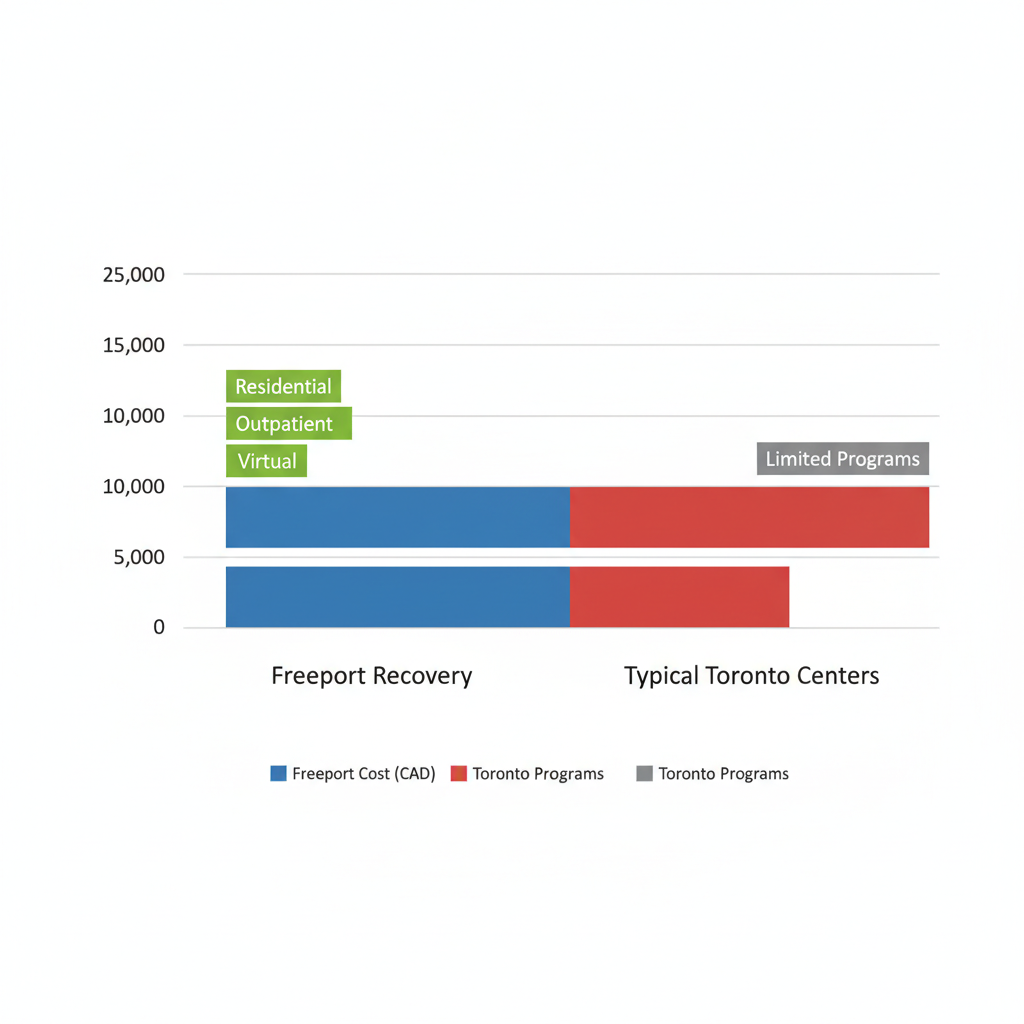
Comparison of rehab costs and programs: Freeport Recovery vs. Toronto area centers
Freeport’s proximity enhances its appeal for those in the GTA, combining evidence-based treatment with unique wellness modalities to support sustained healing beyond traditional models.
Treatment Services Available Near Toronto
Residents seeking drug rehab centers in Toronto have access to a variety of addiction treatment options designed to address drug and alcohol dependencies effectively. These Toronto-accessible recovery services range from intensive residential programs to flexible outpatient and virtual formats, ensuring individuals can find support that fits their lifestyle and needs. In the Greater Toronto Area, GTA addiction programs emphasize evidence-based therapies alongside holistic approaches to promote long-term recovery.
Freeport Recovery, located in nearby St. Catharines, offers comprehensive care for those exploring drug rehab in Toronto or alcohol rehab in Toronto. Their residential treatment provides a structured, medically-informed environment for 30 to 90 days, where clients benefit from 24/7 support shown to yield 60% higher success rates compared to outpatient options alone. Individualized plans incorporate individual therapy, group sessions, family involvement, and relapse prevention strategies tailored to substance use disorders, including prescription drug addiction treatment.
For added flexibility, Freeport’s outpatient and virtual programs allow participants to maintain daily responsibilities while attending sessions remotely–a key advantage for busy Toronto professionals. Aftercare extends support post-treatment through alumni networks and ongoing counseling, fostering sustained sobriety.
Unique modalities set Freeport apart, such as trauma-informed Brazilian Jiu Jitsu for emotional regulation and red light therapy for physical wellness, complemented by nutritional coaching and fitness workshops. “The martial arts helped me rebuild confidence during recovery,” shares one client.
Accessibility remains a priority for Toronto clients, with insurance verification, private pay options, and financing plans covering average Ontario rehab costs of $5,000 to $20,000. This continuum empowers diverse individuals in the GTA to overcome barriers and embrace healing.
Key Factors for Toronto Residents Seeking Rehab
For Toronto residents exploring drug rehab options, understanding local costs and access points is crucial. Drug rehab centers in Toronto often charge upwards of $10,000 monthly for private programs, with Toronto recovery costs escalating to over $20,000 without insurance coverage, according to Ontario averages from Edgewood Health Network. In contrast, Freeport Recovery in St. Catharines offers transparent pricing between $5,000 and $15,000 for comprehensive stays, making affordable treatment in the GTA more attainable. Publicly funded options through Ontario health services exist for drug rehab in Toronto or alcohol rehab in Toronto, but waitlists can stretch months, delaying critical intervention.
Freeport simplifies insurance verification during a confidential assessment, covering major providers and offering flexible financing plans to ease financial burdens. This streamlined process ensures quicker access without hidden fees, allowing focus on healing rather than paperwork.
Geographically, St. Catharines is just a one-hour drive via the QEW highway from Toronto, minimizing travel disruptions for outpatient follow-ups or family visits. This proximity supports seamless integration into daily life post-treatment.
Freeport’s programs also address co-occurring mental health conditions alongside substance use, providing integrated support for lasting recovery, including opioid addiction rehab Ontario.
Contact (289) 273-2485 today for a free assessment and start your journey.
Steps to Begin Recovery from Toronto
Embarking on recovery from substance use is a courageous step, especially when seeking drug rehab centers in Toronto or nearby options. Freeport Recovery in St. Catharines offers accessible support for those starting treatment in the GTA, including programs for drug rehab in Toronto and alcohol rehab in Toronto needs. Follow these numbered steps to initiate the Toronto admission process confidentially.
- Call for a Free Assessment: Contact Freeport Recovery at (289) 273-2485 to speak with an admissions specialist. This initial call, lasting 15-30 minutes, is fully confidential under PHIPA regulations. Quick assessments like this improve outcomes by 40%, according to admissions best practices, helping tailor plans for issues like cocaine addiction treatment.
- Complete the Intake Process: Expect a supportive interview covering your history, needs, and goals. The team verifies insurance coverage or discusses private pay options to ensure affordability without delays.
- Prepare for Quick Admission: Most clients start within three days. Gather essential documents like ID and medical records. Plan travel from Toronto, a short drive via QEW to 109 St Paul Crescent, St. Catharines.
- Involve Family if Desired: Freeport encourages optional family participation to build a strong support network from the outset.
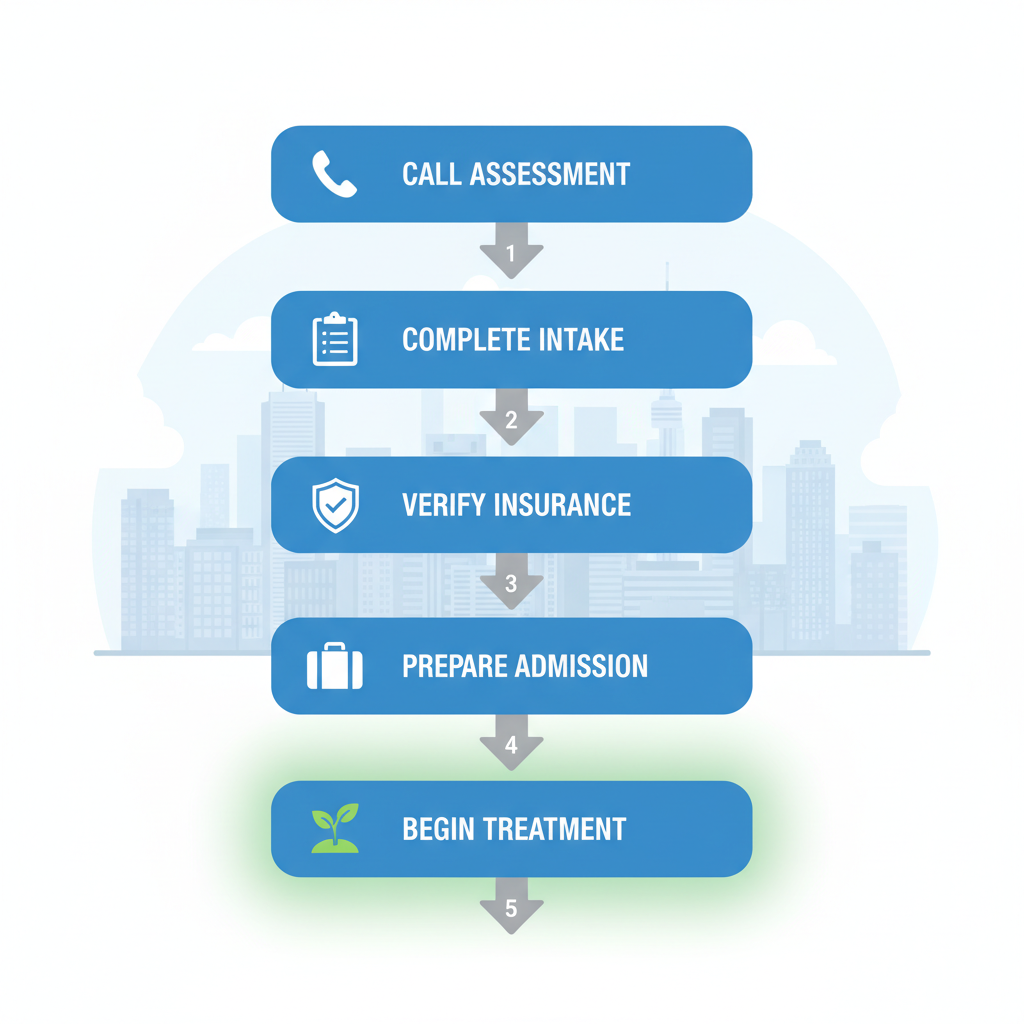
Five key steps to begin your recovery journey from Toronto
These steps remove barriers, paving the way for transformative care. Take the first call today–recovery awaits with compassionate, expert guidance at Freeport.
Achieving Lasting Recovery Near Toronto
Navigating drug rehab centers in Toronto presents challenges like long waitlists and high costs, yet drug rehab in Toronto and alcohol rehab in Toronto provide vital pathways to healing. Freeport Recovery, conveniently near the GTA, offers holistic addiction treatment programs Ontario with rapid access and lifetime aftercare, boosting long-term success by up to 50% through ongoing support in the GTA.
Embrace your Toronto recovery success today–contact Freeport at (289) 273-2485 for a confidential assessment and start your empowered journey to lasting sobriety.