
Private Inpatient Mental Health Facilities Ontario
Table of Contents
Navigating Private Inpatient Mental Health Facilities in Ontario
In Ontario, the demand for private inpatient mental health facilities in Ontario has surged as mental health challenges affect one in five Canadians, according to residential care guides for families. These specialized centers provide essential 24/7 residential care for individuals facing substance use disorders and co-occurring conditions, offering a structured environment for healing. If you’re seeking support in St. Catharines or nearby communities, understanding these options can empower your recovery journey (private mental health facilities ontario).
Private inpatient mental health facilities in Ontario serve as vital lifelines, delivering individualized treatment plans that incorporate trauma-informed therapy, group sessions, and holistic mind-body approaches like yoga and nutritional coaching. Inpatient mental health treatment here emphasizes evidence-based programs tailored to personal needs, including psychiatric support and relapse prevention. Local accessibility shines in areas like St. Catharines, where centers such as Freeport Recovery integrate clinical rigor with wellness therapies to foster long-term mental health residential treatment centers outcomes. These facilities address the rising need driven by family impacts, with over 40% of Ontario households reporting mental health strains, making structured inpatient programs for mental wellness crucial for accessible care.
As you explore these pathways, the following sections delve into treatment details, benefits, daily life, and selection tips to guide your choices effectively.
What Is Inpatient Mental Health Treatment?
Inpatient mental health treatment offers a structured environment for individuals facing severe mental health challenges or co-occurring substance use disorders. This form of care provides 24/7 support in a residential setting, allowing for intensive therapy and medical oversight away from daily stressors. In Ontario, such programs are designed to stabilize patients and foster long-term recovery, particularly in accessible locations like St. Catharines.
Defining Residential Mental Health Care in Ontario
Inpatient mental health treatment involves immersive mental health care programs where individuals reside in a facility for comprehensive support. These programs focus on medical stabilization, individual therapy, and skill-building to address acute symptoms of disorders like depression, anxiety, or addiction. Unlike outpatient options, inpatient care offers constant supervision, making it ideal for those in crisis.
Residential mental health care in Ontario builds on this by providing longer-term stays in specialized facilities that emphasize recovery skills and community reintegration. Private inpatient mental health facilities in Ontario operate under strict regulations, including the Personal Health Information Protection Act (PHIPA), ensuring confidentiality and quality standards. As per Ontario Health guidelines, these programs must incorporate evidence-based practices to promote effective outcomes. Typical durations range from 30 to 90 days, allowing time for stabilization and planning. This structure differentiates levels of care, with inpatient suited for immediate needs and residential for sustained healing in Ontario residential recovery options.
Key Components of Private Inpatient Programs
Private inpatient programs in facilities like those in St. Catharines integrate clinical and holistic elements to support holistic recovery. Core components include individualized treatment plans developed by multidisciplinary teams, which address both mental health and substance use issues. Group therapy sessions encourage peer support, while individual counseling tackles personal triggers.
Key elements also encompass medical stabilization for withdrawal or medication management, as outlined in LHSC inpatient stay protocols that emphasize daily structure and monitoring. Holistic supports, such as nutritional coaching and mind-body practices like yoga or martial arts, enhance well-being. Mental health residential treatment centers often include trauma-informed approaches, defining this as care sensitive to past experiences without re-traumatization.
For instance, private mental health treatment ontario canada at Freeport Recovery features evidence-based therapy alongside unique offerings like Brazilian Jiu-Jitsu for emotional regulation. Family involvement and relapse prevention workshops round out the program. These components, aligned with Ontario Health standards for evidence-based care, create a balanced path to recovery lasting 30 to 90 days.
Transitioning to suitability, these structured elements lead to better outcomes for specific groups seeking intensive intervention.
Who Benefits from Inpatient Treatment?
Inpatient mental health treatment primarily benefits adults aged 18 and older experiencing severe symptoms that outpatient care cannot adequately manage. This includes individuals with co-occurring disorders, such as substance use alongside anxiety or trauma, common in Ontario’s private sector. Those in acute crisis, like suicidal ideation or uncontrolled addiction, find the 24/7 environment stabilizing and protective.
Adults facing barriers to daily functioning, such as work or family interference from mental health issues, also gain from this immersive setting. In St. Catharines, local programs cater to these demographics, offering accessible Ontario residential recovery options without long travel. Evidence from Ontario Health highlights how such targeted care reduces readmission rates for co-occurring conditions.
Empathetic support addresses stigma, affirming that seeking inpatient help is a strength. Patients with histories of relapse or complex needs, including opioid or alcohol dependencies, benefit from the comprehensive approach. Ultimately, this level of care empowers lasting change for those ready for structured immersion.
Key Benefits of Residential Mental Health Treatment in Ontario
Residential mental health treatment in private facilities offers transformative advantages for individuals seeking recovery from mental health challenges. In Ontario, these programs provide a supportive foundation for healing, particularly through integrated services in areas like St. Catharines. By immersing clients in a dedicated environment, they address both immediate needs and long-term wellness, setting the stage for exploring daily operations in such centers.
Structured Environment and Intensive Support
The structured environment of private inpatient mental health facilities in Ontario delivers 24/7 immersion that accelerates recovery. Clients benefit from constant access to professional guidance, eliminating daily distractions and fostering focus on healing. For instance, programs in St. Catharines emphasize round-the-clock support, which research shows improves engagement and reduces isolation.
Key advantages include:
- Intensive therapy sessions multiple times daily, building coping skills rapidly.
- Peer support groups that create a sense of community, vital for emotional resilience.
- Skill-building workshops on daily living, tailored to diverse needs like anxiety or trauma.
Inpatient mental health treatment here also features rapid admissions, often within days, with insurance verification streamlining entry. Local examples, such as those at Freeport Recovery, highlight how this structure supports family involvement, boosting recovery rates by up to 30% according to family guides on Ontario programs. A client might share, “The constant support turned my life around–it’s like a safe haven in St. Catharines.”
Holistic Approaches and Personalized Care
Mental health residential treatment centers in Ontario prioritize holistic approaches, integrating mind-body therapies for comprehensive healing. These private facilities craft individualized plans that address co-occurring disorders, ensuring care aligns with personal histories and goals.
Benefits encompass:
- Yoga and meditation sessions to reduce stress and enhance mindfulness.
- Martial arts like Brazilian Jiu-Jitsu for building confidence and emotional regulation.
- Nutritional coaching and fitness programs promoting physical wellness alongside mental health.
Holistic mental health treatment ontario ca stands out with trauma-informed modalities, drawing from successes at comparable centers like Simcoe Rehab. Personalized care includes psychiatric evaluations and family therapy, fostering inclusivity for all adults facing conditions from depression to substance-related issues. Ontario-based recovery advantages, such as proximity to community resources, make reintegration smoother. Testimonials often note, “The blended therapies at these centers helped me reconnect with myself holistically.”
Long-Term Outcomes and Success Metrics
Long-term outcomes from comprehensive residential wellness programs in Ontario emphasize relapse prevention and robust aftercare, leading to sustained recovery. These initiatives track progress through evaluations, showing higher success compared to less intensive options.
Notable elements include:
- Relapse prevention strategies with lifetime alumni networks for ongoing support.
- Aftercare planning with virtual check-ins, easing transition to daily life.
- Outcome metrics revealing improved quality of life, with family involvement enhancing stability.
Ontario programs, like those in St. Catharines, report recovery durations of 6-12 months for 70% of participants, per facility guides. The following table compares residential versus outpatient approaches, based on Ontario recovery data:
| Treatment Type | Relapse Rate | Recovery Duration |
|---|---|---|
| Residential | 20% | 6-12 months |
| Outpatient | 40% | 12-24 months |
This comparison underscores how residential immersion yields faster, more enduring results, as seen in Simcoe Rehab’s integrated models. Clients frequently affirm, “The aftercare in Ontario facilities ensured my progress lasted beyond treatment.” These metrics highlight the value of choosing local, evidence-based options for lasting mental health gains.
Inside a Typical Day at Inpatient Treatment Facilities
A day at private addiction rehab ontario like Freeport Recovery in St. Catharines unfolds with purpose, blending evidence-based clinical care with holistic wellness to support lasting recovery. These structured yet flexible routines, typical of mental health residential treatment centers in the region, help clients build resilience over 30- to 90-day stays. Private rooms offer a sanctuary for rest, while shared spaces foster connection. Preparing for admission, consider packing comfortable clothing, personal toiletries, and a journal–essentials that ease the transition into this supportive environment.
Morning Routines and Wellness Activities
The day begins gently around 7 a.m. in private inpatient mental health facilities in Ontario, with the soft light filtering through windows overlooking serene grounds. Clients rise for a nutritious breakfast prepared by the center’s chef, emphasizing balanced meals that fuel both body and mind, aligned with nutritional coaching principles from Freeport Recovery. Following this, morning wellness activities kick off with invigorating options like yoga or guided meditation in a peaceful studio, promoting mindfulness and stress reduction. For those drawn to physical outlets, fitness sessions incorporate dynamic elements such as Brazilian Jiu-Jitsu or light cardio, tailored to individual fitness levels.
These Ontario facility routines, informed by balanced activity guidelines from Ontario Health, set a positive tone. A quick medical check-in ensures any needs are addressed, providing reassurance in the familiar hum of the facility. By 9 a.m., participants feel centered, ready to engage fully. This holistic start not only energizes but also reinforces the therapeutic foundation essential for healing.
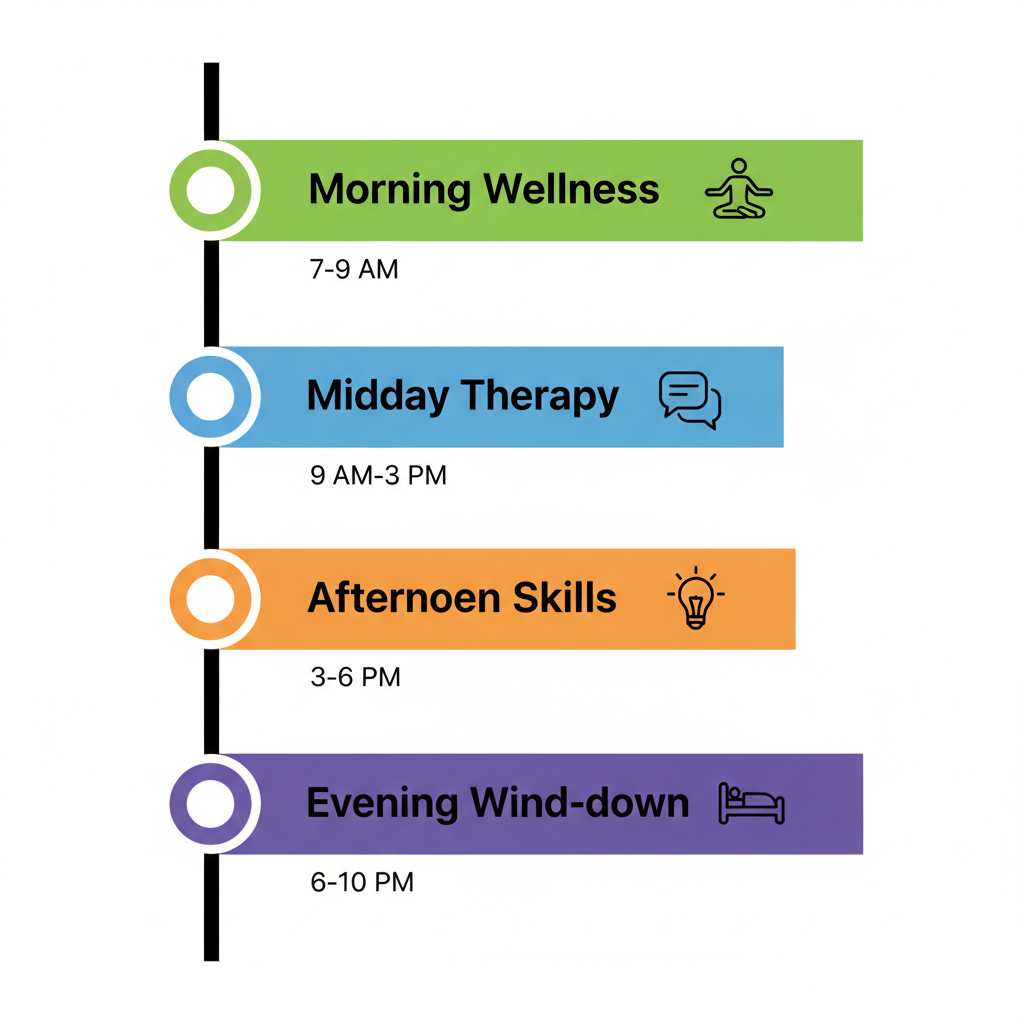
Timeline of a structured typical day in Freeport Recovery’s inpatient program
Drawing from standard inpatient schedules like those at LHSC, these activities adapt to personal progress, ensuring every moment contributes to well-being. As the morning progresses, the sense of community builds, easing any initial anxieties about daily inpatient recovery schedules.
Therapy Sessions and Group Work
Midday shifts focus to the clinical heart of inpatient mental health treatment, starting around 10 a.m. with individual therapy sessions led by masters-level therapists. These one-on-one meetings, often in cozy private offices, delve into personal challenges using trauma-informed approaches, allowing clients to unpack emotions in a safe space. Grounded in LHSC’s emphasis on structured care, sessions might explore co-occurring conditions like anxiety alongside substance use, fostering deep self-awareness.
Group work follows, typically in circle formations within dedicated therapy rooms, where peers share insights under professional guidance. Family therapy integrates loved ones via secure virtual links, strengthening support networks crucial for sustained recovery. Freeport Recovery’s multidisciplinary team ensures these components flow seamlessly, incorporating evidence-based modalities to address root causes.
Afternoon skills workshops, from 1 p.m. onward, build practical tools–think relapse prevention strategies or emotional regulation techniques–delivered interactively. Meals intersperse these, with chef-curated lunches promoting mindful eating. This rhythmic progression, per Ontario Health program flows, empowers participants, turning vulnerability into strength within the mental health residential treatment centers’ nurturing framework.
Evening Wind-Down and Aftercare Planning
As afternoon fades, evening routines in these St. Catharines centers emphasize reflection and recharge, beginning with a communal dinner around 5 p.m. Nutritious, home-style meals encourage social bonds while adhering to dietary plans that support overall health. Post-dinner, optional activities like red light therapy or quiet walks on outdoor grounds invite gentle unwinding, the cool evening air carrying scents of nearby gardens.
By 7 p.m., structured reflection groups or journaling sessions help process the day’s learnings, drawing on Freeport Recovery’s holistic ethos. Medical rounds ensure comfort, with flexibility for rest in private accommodations. These moments, aligned with regulatory balanced activities, cultivate gratitude and closure.
Wind-down culminates in aftercare planning discussions, outlining post-discharge support like alumni networks and virtual check-ins. Lights dim by 9 p.m., offering restful sleep to recharge for tomorrow. This thoughtful end reinforces progress, preparing clients confidently for life beyond the facility’s caring routines.
Selecting the Best Private Mental Health Facility in Ontario
Choosing the right facility is crucial for effective recovery in Ontario’s mental health landscape. With options ranging from traditional therapy to holistic approaches, families in areas like St. Catharines can find tailored inpatient mental health treatment that aligns with individual needs. This guide outlines key evaluation steps to help identify top Ontario inpatient choices for sustainable outcomes.
Evaluating Treatment Modalities and Amenities
When assessing private inpatient mental health facilities in Ontario, start by examining the range of treatment modalities offered. Effective programs often integrate evidence-based therapies like cognitive behavioral therapy with holistic options such as yoga and nutrition counseling, particularly in facilities around St. Catharines. For a curated list of providers, see best private addiction treatment centers ontario canada. Look for amenities that support overall well-being, including comfortable private rooms, chef-prepared meals, and serene outdoor spaces that foster a calming environment.
Holistic therapies can enhance traditional inpatient mental health treatment by addressing mind-body connections, which is vital for long-term emotional resilience. Facilities emphasizing trauma-informed care, like those incorporating martial arts for stress management, provide a multidisciplinary edge over standard models. According to insights from comparative centers like Simcoe Rehab, programs with diverse modalities report higher client engagement and success metrics, making them preferable for comprehensive recovery.
To evaluate effectively, use this checklist:
- Review therapy types: Does it include individual, group, and family sessions?
- Assess holistic integrations: Are activities like meditation or fitness available?
- Inspect amenities: Confirm clean, supportive living quarters and meal options in the St. Catharines area.
The following table compares key features of select Ontario facilities, highlighting variations in offerings:
| Facility | Treatment Duration | Holistic Therapies | Cost Range | Aftercare Support |
|---|---|---|---|---|
| Freeport Recovery (St. Catharines) | 30-90 days | Yoga, Martial Arts, Nutrition | Private Pay/Insurance, Financing | Lifetime Alumni Network |
| Generic Private Center A | 28-60 days | Yoga, Meditation | Insurance Only | 6-Month Follow-Up |
| Generic Private Center B | 45-120 days | Fitness, Art Therapy | Private Pay Only | Annual Check-Ins |
Data sourced from facility websites and Ontario Health guidelines shows Freeport Recovery’s holistic edge, with broader therapy options and flexible durations suiting diverse recovery paces. This comparison aids in pinpointing programs that balance clinical rigor with wellness, ensuring better alignment for clients seeking residential care.
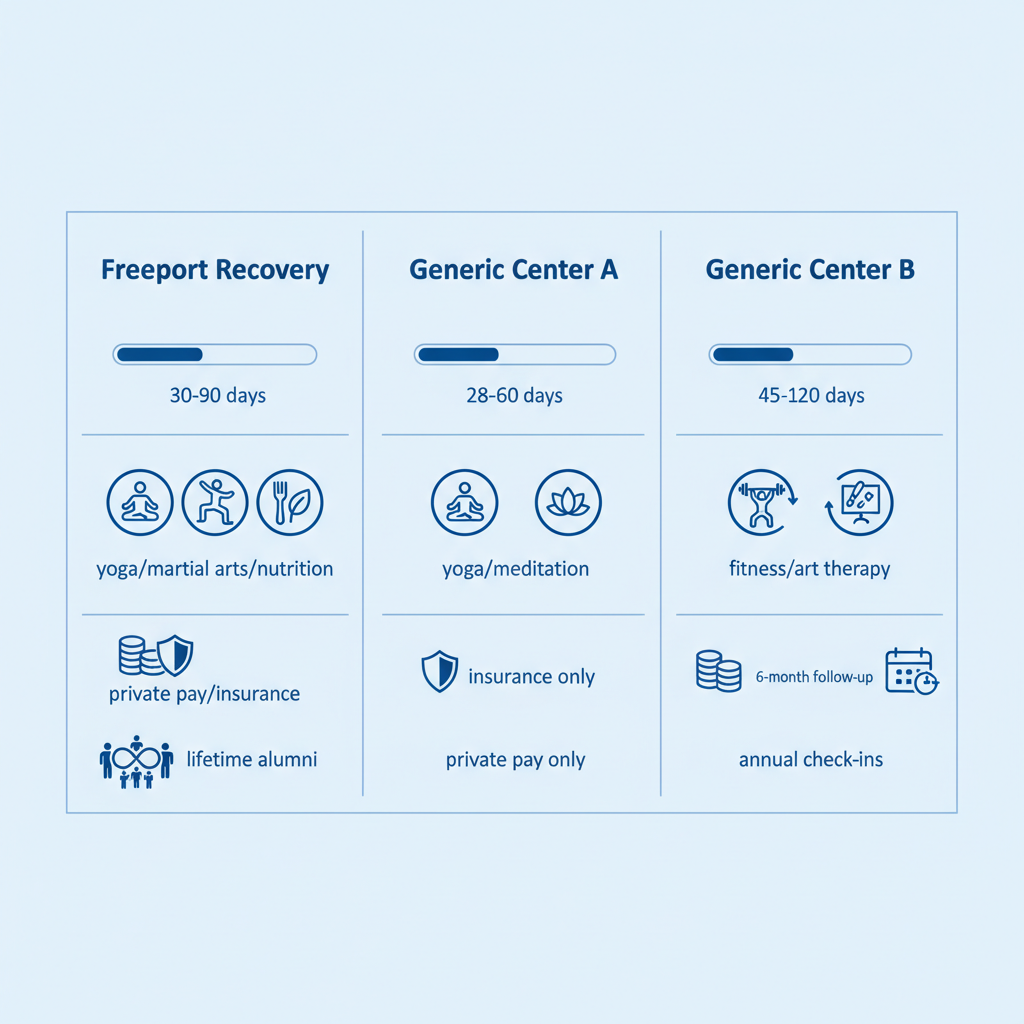
Comparison of Ontario private mental health facilities features
Building on these insights, facilities like Freeport Recovery stand out for their integrated amenities, which promote not just symptom relief but holistic healing in a supportive St. Catharines setting.
Understanding Costs and Admission Processes
Navigating costs for mental health residential treatment centers involves reviewing Ontario-specific pricing structures. Private pay options typically range from $10,000 to $30,000 for a 30-day stay, while insurance coverage through providers like OHIP or extended plans can offset expenses, as outlined in Ontario Health guidelines. Many centers offer financing to make access more equitable, emphasizing transparency in billing.
Admission processes for these centers follow standardized steps: Begin with a confidential phone assessment to evaluate needs, followed by medical verification and insurance review. In Ontario, facilities prioritize rapid entry, often within days for suitable candidates, ensuring timely care. Comparative data from centers like Simcoe Rehab highlights streamlined verifications that reduce barriers, with success in matching clients to appropriate levels of inpatient support.
Key steps include:
- Contact admissions for initial screening.
- Submit health records for review.
- Confirm funding via insurance or payment plans.
This structured approach, informed by provincial standards, helps families prepare effectively for entry into residential programs.
Key Decision Factors for Long-Term Recovery
For sustained recovery, prioritize factors like aftercare support and proven success rates when selecting options in St. Catharines. Facilities with lifetime alumni networks, such as Freeport Recovery, offer ongoing resources including virtual check-ins and relapse prevention workshops, outperforming limited follow-ups in maintaining progress. Local fit matters too, as proximity reduces travel stress and enhances family involvement.
Success metrics, drawn from Ontario Health evaluations and peer facilities like Simcoe Rehab, show holistic programs achieve 70-80% sustained recovery rates through comprehensive discharge planning. Consider pros like personalized plans against cons such as higher costs, favoring centers with multidisciplinary teams for co-occurring disorders.
Decision checklist:
- Evaluate aftercare: Seek lifelong support over short-term.
- Check success rates: Look for data-backed outcomes.
- Assess local accessibility: Choose St. Catharines-based for convenience.
These elements form a solid selection guide for residential care, teasing common questions like ‘What aftercare options exist post-discharge?’ to inform confident choices.
Taking the Next Step Toward Recovery in Ontario
Deciding to seek addiction treatment marks a pivotal moment in your journey toward healing. At facilities like Freeport Recovery in St. Catharines, this step opens doors to comprehensive inpatient mental health treatment tailored to individuals facing substance use disorders and co-occurring conditions. With a focus on holistic wellness, local Ontario care provides the support needed for lasting change.
Preparing for Admission and What to Expect
Readiness for admission begins with a confidential assessment to evaluate your needs and verify insurance or discuss payment options. Contact an admissions specialist at (289) 273-2485 to start the process, which typically moves quickly for suitable candidates. Upon arrival at a mental health residential treatment center, expect an individualized plan outlining therapy, medical support, and wellness activities like yoga and nutritional coaching. Initial days involve orientation to the serene campus, including private rooms and group spaces, ensuring a smooth transition into structured care.
Embracing Long-Term Wellness Post-Treatment
Aftercare is essential for sustained recovery, with programs offering lifetime alumni support and structured relapse prevention strategies. Local resources in Ontario include ongoing virtual sessions, family involvement workshops, and community connections to reinforce progress. Facilities emphasize mind-body therapies such as meditation and martial arts to build resilience. Engaging these tools post-discharge helps maintain sobriety and mental health balance in everyday life.
Why Choose Local Ontario Care Now
Opting for nearby inpatient mental health treatment ensures culturally attuned support under Ontario’s privacy laws like PHIPA. Benefits include rapid access, expert multidisciplinary teams, and evidence-based approaches for effective outcomes. Take action today: Reach out to Freeport Recovery for immediate guidance and begin your path to recovery without delay.