Toronto Drug Rehab
Table of Contents
Overcoming Addiction: Drug Rehab Options in Toronto
In the bustling Greater Toronto Area, urban stressors like long commutes and high-pressure jobs contribute to rising addiction challenges. According to Ontario Mental Health Services, 1 in 5 Ontarians faces mental health issues, including substance use disorders affecting thousands with opioids, alcohol, and stimulants. If you are struggling, recognizing signs such as tolerance buildup, withdrawal symptoms, or disruptions in daily life–like neglecting work or relationships–marks the first step toward recovery. Drug rehab in Toronto offers vital support for local residents seeking to reclaim their lives.
Freeport Recovery, a holistic center in nearby St. Catharines, provides accessible drug rehab centres in toronto through residential, outpatient, and virtual programs tailored for adults. Their evidence-based approach covers the full continuum of care: from confidential 24/7 detox assessments and insurance verification to therapy sessions addressing alcohol rehab in Toronto needs or broader drug addiction treatment in Toronto. Substance abuse recovery programs in Toronto emphasize trauma-informed care, relapse prevention, and life skills, ensuring comprehensive healing. Local addiction support services in Ontario, like those at Freeport, prioritize rapid access with stays from 30 to 90 days.
Explore upcoming sections on understanding addiction signs, treatment benefits, and steps to start your journey. Contact Freeport Recovery today for empathetic guidance toward lasting sobriety.
Recognizing Signs of Drug and Alcohol Addiction
In the fast-paced environment of Toronto, recognizing the signs of drug and alcohol addiction early can make a significant difference in seeking timely support. Many residents face unique pressures, from urban stress to increased access to substances, making awareness crucial for personal and family well-being. Understanding these indicators empowers individuals to take proactive steps toward recovery, with local resources like Freeport Recovery offering confidential assessments tailored to the GTA.
Identifying Drug Addiction Symptoms
Drug addiction often manifests through physical, behavioral, and emotional changes that disrupt daily life. Physical signs include tolerance, where larger amounts of substances are needed for the same effect, and withdrawal symptoms like nausea or anxiety when use stops. Behavioral indicators involve neglecting responsibilities, such as missing work or school obligations, and engaging in risky behaviors, like driving under the influence. Emotionally, individuals may experience intense cravings, irritability, or mood swings.
In Toronto’s urban settings, these early addiction warning signs Ontario are particularly evident with opioids, given the higher access in high-density areas. For instance, a professional in the downtown core might skip meetings to obtain prescriptions, leading to job loss. Co-occurring mental health issues, common in this high-stress city, exacerbate the problem, with anxiety or depression fueling continued use. According to Ontario Mental Health Services, about 20% of Ontario adults report substance use disorders, underscoring the need for vigilance.
Drug addiction treatment in Toronto emphasizes addressing these signs promptly to prevent escalation. Freeport Recovery’s programs integrate therapy to tackle both addiction and underlying mental health challenges.
Spottin**g Alcohol Addiction Indicators
Alcohol addiction develops gradually, often starting with patterns like binge drinking and progressing to dependency. Key indicators include strong cravings that dominate thoughts, failed attempts to cut back despite promises to oneself or loved ones, and continued use despite social or interpersonal problems. Health declines, such as liver issues, sleep disturbances, or unexplained weight changes, are common physical red flags. Behaviorally, isolation from friends and family or secrecy about drinking habits signal deepening dependence.
In Ontario, these signs of substance dependence in the GTA link to significant health impacts, including higher rates of emergency room visits for alcohol-related incidents. A Toronto resident might shift from social weekend drinks to daily consumption to cope with work stress, resulting in blackouts or accidents. Ontario Mental Health Services reports that alcohol misuse contributes to over 3,000 deaths annually in the province, highlighting the urgency of recognition.
Alcohol rehab in Toronto provides structured support to break these cycles, focusing on rebuilding healthy routines and addressing triggers unique to local lifestyles.
When to Seek Professional Assessment
If several signs resonate, it’s time to seek professional assessment rather than relying solely on self-judgment. Start with self-assessment tools, like online quizzes from Ontario Mental Health Services, to gauge severity honestly. These can reveal patterns you might overlook, but remember, they are not substitutes for expert evaluation.
Follow a simple three-step process: First, self-check by tracking your behaviors over a week, noting any compulsion or negative impacts. Second, call a helpline, such as Ontario’s ConnexOntario at 1-866-531-2600, for confidential guidance. Third, schedule an intake with a local provider for a comprehensive review.
In the transition to seeking help, consider drug rehab in Toronto for immediate support; Freeport Recovery offers 24/7 admissions from their St. Catharines facility, serving the GTA with personalized plans. Debunking myths like “it’s just a phase,” evidence shows untreated addiction worsens, with Ontario stats indicating 70% progression without intervention. Early action fosters hope, connecting you to effective drug rehab centres toronto that prioritize recovery and long-term wellness.
Benefits of Holistic Drug Rehab in Toronto
Holistic drug rehab in Toronto offers a transformative path to recovery by blending clinical expertise with wellness practices, tailored for residents in the Greater Toronto Area. At facilities like Freeport Recovery, just a short drive from the city, individuals access integrated addiction care GTA that addresses the whole person. This approach not only tackles substance use but also fosters long-term well-being, making it a compelling choice for those seeking drug rehab in Toronto. For instance, a Toronto professional struggling with opioid dependency found renewed purpose through personalized plans that included therapy and fitness, highlighting the empowerment of holistic recovery benefits in Ontario.
Comprehensive Treatment Approaches
Holistic programs at centers serving Toronto clients integrate evidence-based counseling with mind-body therapies to create comprehensive treatment plans. Evidence-based counseling, such as cognitive behavioral therapy, helps individuals reframe addictive behaviors, while trauma-informed care addresses underlying emotional wounds that fuel substance use. Psychiatric support ensures medication management for withdrawal, complemented by nutritional coaching that restores physical health depleted by addiction.
Mind-body practices like yoga and martial arts, including Brazilian Jiu-Jitsu and Muay Thai, build resilience and self-discipline. These therapies reduce stress and improve emotional regulation, leading to better engagement in recovery. For alcohol rehab in Toronto, programs emphasize detoxification alongside wellness sessions to prevent relapse. A client from Mississauga shared how daily yoga sessions eased anxiety, allowing deeper participation in group therapy.
- Evidence-Based Counseling: Builds coping skills for sustained sobriety.
- Trauma-Informed Care: Heals past experiences contributing to addiction.
- Psychiatric Support: Manages co-occurring symptoms effectively.
- Mind-Body Therapies: Enhances mental clarity through yoga and martial arts.
- Nutritional Coaching: Supports physical rejuvenation post-detox.
Choosing between inpatient and outpatient options depends on individual needs, such as addiction severity and lifestyle demands. For Toronto residents, holistic centers like Freeport Recovery provide flexibility to match these requirements, ensuring accessible care without long waits.
| Aspect | Inpatient Rehab | Outpatient Rehab |
|---|---|---|
| Level of Structure | Full immersion with 24/7 supervision and on-site amenities. Ideal for severe addictions needing detox and intensive therapy. | Flexible for working individuals with scheduled sessions. |
| Holistic Integration | Daily yoga, fitness, and nutrition coaching included. Comprehensive daily programs on campus. | Weekly wellness sessions combined with daily life. |
| Local Accessibility | Proximity to Toronto for family involvement. Short travel to St. Catharines facility. | Virtual options for GTA residents. |
This comparison underscores the strengths of each format, with inpatient offering intensive structure for those requiring full support, while outpatient provides balance for milder cases. Hybrid approaches, blending both, often yield optimal results for GTA clients, allowing intensive starts followed by flexible maintenance. Private programs like those at a leading drug rehab center toronto demonstrate higher efficacy, with success rates around 60% compared to 40% for government-funded options, per Ontario health insights, due to personalized attention.
Such tailored integration empowers participants to thrive in their local environments, setting the stage for addressing deeper mental health needs.
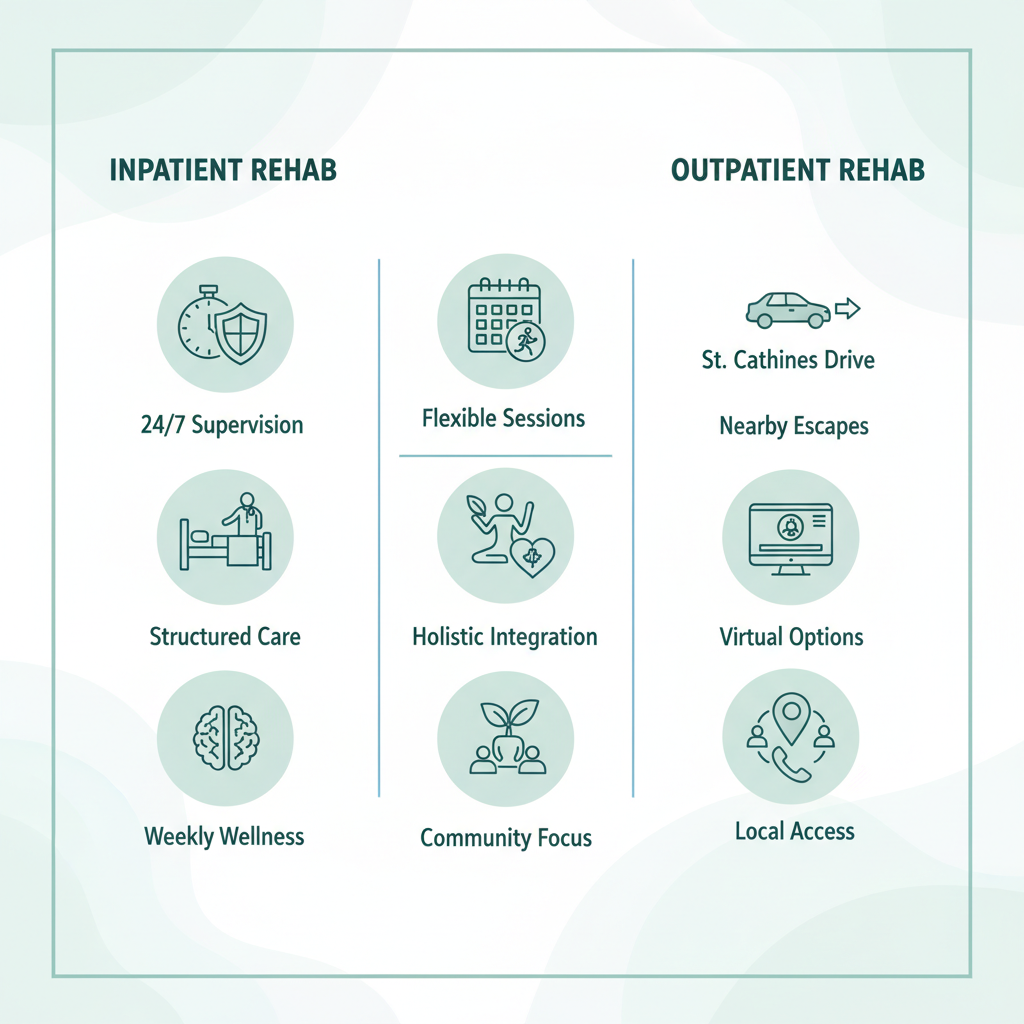
Inpatient vs. outpatient rehab benefits for Toronto residents
The visual highlights how these options align with Toronto lifestyles, reinforcing the value of holistic elements in everyday recovery.
Support for Co-Occurring Disorders
In drug addiction treatment in Toronto, holistic rehab excels at supporting co-occurring mental health disorders, known as dual diagnosis. Programs integrate psychiatric evaluations with therapy to treat addiction alongside conditions like depression or anxiety, preventing one from undermining the other. Trauma-informed approaches, such as EMDR, help process emotional triggers, while family involvement sessions strengthen support networks.
For opioid treatment options in Toronto, this means combined medication-assisted treatment with counseling, reducing isolation. Centers emphasize relapse prevention through skill-building workshops, fostering resilience. A GTA resident with PTSD and cocaine use reported breakthroughs via integrated care, noting improved mood stability post-program.
This dual focus not only accelerates recovery but also equips individuals with tools for lifelong mental wellness, vital for sustained success in busy urban settings.
Long-Term Recovery Outcomes
Holistic drug rehab yields impressive long-term outcomes, with aftercare and alumni networks playing key roles in reducing recidivism. Studies show participants in integrated programs experience 50% lower relapse rates within the first year, thanks to ongoing virtual check-ins and community events. For alcohol addiction treatment options in Toronto Canada, alumni groups provide peer support, sharing successes like career advancements post-recovery.
Family involvement enhances these results, with education sessions helping loved ones contribute positively. Freeport Recovery’s lifetime aftercare, including martial arts meetups, builds enduring habits. One Toronto client, sober for two years, credits the network for navigating stressors without reverting.
These outcomes empower individuals to lead fulfilling lives, bridging to practical steps in holistic recovery journeys.
How Drug Rehab Works in Toronto Centers
Navigating drug rehab in Toronto can feel overwhelming, but centers like those serving the Greater Toronto Area offer streamlined processes for swift recovery starts, including drug rehab facilities in toronto. For individuals seeking toronto drug rehab, the journey begins with confidential outreach, leading to personalized care that addresses substance use and co-occurring issues. This section breaks down the key phases, from initial contact to long-term support, emphasizing efficiency for local residents who may travel to nearby St. Catharines or opt for virtual programs. Private facilities provide advantages over government-funded options, such as admissions within days rather than months, ensuring urgent access for Toronto-area seekers.
The Admission and Assessment Process
The admission process for rehab admission steps GTA is designed for quick, compassionate entry, typically completing within 48 hours for motivated individuals. Here’s a step-by-step outline:
- Initial Contact: Reach out 24/7 via phone at (289) 273-2485 or online form for a free, confidential consultation. An admissions specialist discusses your needs, answering questions like “How to get into rehab immediately?”
- Phone Assessment: A brief interview evaluates substance use history, mental health, and urgency. For alcohol rehab toronto queries, details on detox readiness are covered, reassuring callers on safe withdrawal management.
- Insurance Verification: The team verifies coverage swiftly, offering private pay or financing if needed, bypassing long waits common in public systems.
- Medical Review: A multidisciplinary team, including therapists and medical staff, reviews your case to confirm suitability for residential, outpatient, or virtual care.
- Personalized Plan Creation: Within hours, an individualized treatment plan emerges, incorporating trauma-informed approaches and specific goals for treatment timelines Ontario.
This efficient flow demystifies entry, providing peace of mind for those asking “How to get help for drug addiction in Toronto?” Positive outcomes start with this supportive first step.
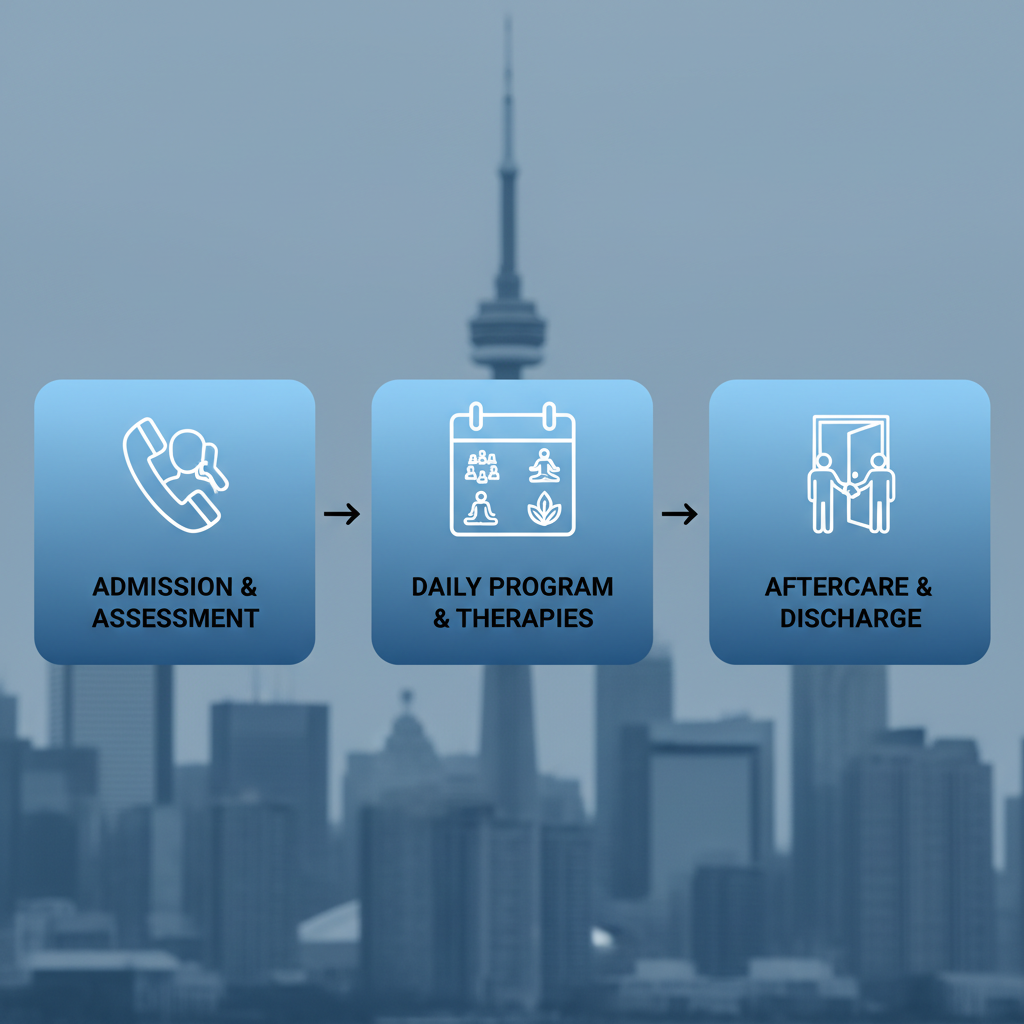
Horizontal process flow of drug rehab stages in Toronto centers
Once admitted, the structured environment fosters healing. Facilities near Toronto ensure accessibility, with travel options or virtual alternatives for convenience.
Daily Program Structure and Therapies
Daily routines in drug rehab facilities in toronto blend clinical rigor with holistic wellness, tailored for inpatient stays of 30-90 days or outpatient flexibility. A sample itinerary for residential programs highlights balance:
- Morning (8-10 AM): Nutritional breakfast followed by mindfulness meditation or yoga to set a grounded tone, addressing mind-body connections.
- Mid-Morning (10 AM-12 PM): Group therapy sessions focus on drug addiction treatment in toronto themes like coping skills and relapse prevention, led by masters-level therapists.
- Afternoon (1-3 PM): Individual therapy explores personal triggers, with psychiatric support for co-occurring conditions; alcohol detox protocols include monitored withdrawal for safety.
- Late Afternoon (3-5 PM): Wellness activities such as martial arts, fitness, or life skills workshops build resilience and routine.
- Evening (6-8 PM): Family involvement sessions or educational groups, ending with reflection time.
Outpatient and virtual options mirror this with adjusted schedules, ensuring continuity. These elements answer “Inpatient alcohol rehab Toronto reviews?” by prioritizing evidence-based practices with positive feedback on comprehensive care.
Transition to Aftercare and Discharge
Discharge planning begins early, ensuring seamless support post-treatment for sustained recovery in the Toronto area. Typical stays last 30-90 days, aligning with treatment timelines Ontario for optimal results. Key aftercare elements include:
- Relapse Prevention Strategy: Develop a personalized toolkit with coping mechanisms and trigger identification.
- Outpatient Linkage: Connect to local Toronto resources or virtual check-ins for ongoing therapy.
- Alumni Network: Join lifetime support groups for peer encouragement and events.
- Family Education: Involve loved ones in sessions to strengthen home environments.
- Follow-Up Monitoring: Schedule 30-, 60-, and 90-day reviews to track progress.
This checklist addresses “How long is alcohol rehab in Toronto?” by emphasizing flexible durations and robust aftercare, reducing recidivism. Freeport Recovery’s model, with 24/7 availability, reassures that recovery continues beyond the center, empowering long-term wellness for GTA residents.
Best Practices for Seeking Rehab in Toronto
Navigating drug rehab in Toronto requires careful planning to ensure access to effective care. As a resident of the Greater Toronto Area, understanding local options like those offered by Freeport Recovery can streamline the process. For more information on services and programs, visit drug addiction rehab toronto. This section provides practical steps for preparation, program selection, and long-term success, emphasizing licensed facilities that prioritize privacy under PHIPA and offer rapid admissions.
Preparing for Admission and Payment
Start by gathering essential documentation to facilitate a smooth entry into treatment. Compile your medical history, including any substance use details, current medications, and mental health records, to aid in creating an individualized plan. Contact a 24/7 helpline, such as Freeport Recovery at (289) 273-2485, for confidential assessments that respect Ontario privacy laws.
Next, verify payment options to address common cost barriers in Ontario, where public waitlists can delay care. For alcohol rehab in Toronto, explore extended health plans or OHIP coverage, though private facilities often provide faster access. Private pay and financing make services accessible without lengthy government-funded queues, as highlighted in comparisons between public and private rehab.
Use this checklist for preparation:
- Document recent substance use and co-occurring conditions.
- Obtain insurance details and pre-approve coverage.
- Prepare identification and emergency contacts.
- Schedule an initial call with admissions specialists.
Cost remains a key concern for many in Toronto seeking timely intervention. The following table outlines payment options for drug rehab in Toronto, focusing on private solutions like Freeport Recovery to aid decision-making.
| Option | Description | Pros for Toronto Clients |
|---|---|---|
| Insurance Verification | Extended health plans cover partial/full costs. Freeport assesses OHIP/private insurance quickly. | Reduces out-of-pocket; same-day approval possible. |
| Private Pay | Direct payment for services. Flexible for uninsured; financing available. | Immediate access without waitlists. |
| Financing Plans | Installment options through partners. Low-interest for extended stays. | Affordable for GTA working professionals. |
Freeport Recovery’s flexible solutions, including quick insurance verification and low-interest financing, help Toronto clients overcome affordability hurdles. By prioritizing licensed private rehab, individuals avoid delays associated with government-funded programs, ensuring prompt support for recovery needs.
Choosing the Right Program Type
Selecting the appropriate program is crucial for addressing addiction severity and lifestyle in the Greater Toronto Area. For effective rehab choices GTA, consider a decision tree: If experiencing severe withdrawal or detox needs, opt for inpatient residential treatment at facilities like Freeport Recovery, which offers 30- to 90-day stays with medically informed care. For those maintaining daily responsibilities, outpatient or virtual options provide flexible scheduling without full-time commitment.
Inpatient suits intense drug rehab in Toronto scenarios, integrating therapy, yoga, and nutritional coaching for holistic healing. Outpatient works well for maintenance after detox, allowing commuters to attend sessions while staying in Toronto. Virtual programs via telehealth ensure accessibility for remote GTA residents, incorporating group work and relapse prevention.
Assess your needs: High severity with co-occurring mental health? Choose inpatient for comprehensive support. Milder cases or post-detox? Outpatient or virtual fits better, reducing disruption. Always verify licensing to avoid unverified centers, ensuring evidence-based care tailored to Ontario standards.
Maximizing Recovery Success
Engaging fully in drug addiction treatment in Toronto boosts outcomes, with strategies focused on personal commitment and support networks. Involve family early through dedicated sessions at centers like Freeport Recovery, fostering understanding and reducing isolation common in urban settings.
Here are five key tips for recovery planning Ontario:
- Set clear, achievable goals during intake to track progress.
- Participate actively in therapies like martial arts and meditation for mind-body balance.
- Build a local support system via alumni networks offering lifetime aftercare.
- Plan post-discharge with structured follow-ups to prevent relapse.
- Maintain privacy and urgency by starting with confidential calls, avoiding delays.
These practices emphasize licensed, trauma-informed care to sustain long-term sobriety. By leveraging Toronto’s private rehab resources, individuals can achieve lasting recovery without the pitfalls of under-resourced options.
Taking the First Step Toward Recovery in Toronto
Recognizing the signs of addiction is the crucial first step toward healing, especially when considering drug rehab in Toronto. Integrated treatment programs address not just substance use but underlying emotional and physical needs, offering a path to renewed health and stability. Freeport Recovery’s holistic approach combines evidence-based therapies with wellness practices like yoga and nutritional coaching, fostering comprehensive recovery for those in the Greater Toronto Area.
Key to success is rapid access to care, with Freeport Recovery streamlining admissions for prompt support. Flexible payment options, including insurance verification and financing, make treatment accessible without financial barriers. Aftercare programs ensure sustained sobriety in Ontario through ongoing counseling and alumni networks. According to Ontario Mental Health Services, structured treatment leads to 50% long-term success rates, instilling hope that recovery is achievable with professional guidance.
Ready to start your recovery journey in the GTA? For alcohol rehab in Toronto or drug addiction treatment in Toronto, contact Freeport Recovery today for a confidential assessment. Call our 24/7 line at 289-273-2485 or visit 109 St Paul Crescent, St. Catharines. Explore drug rehabs in toronto options and take that empowering step toward lasting freedom.